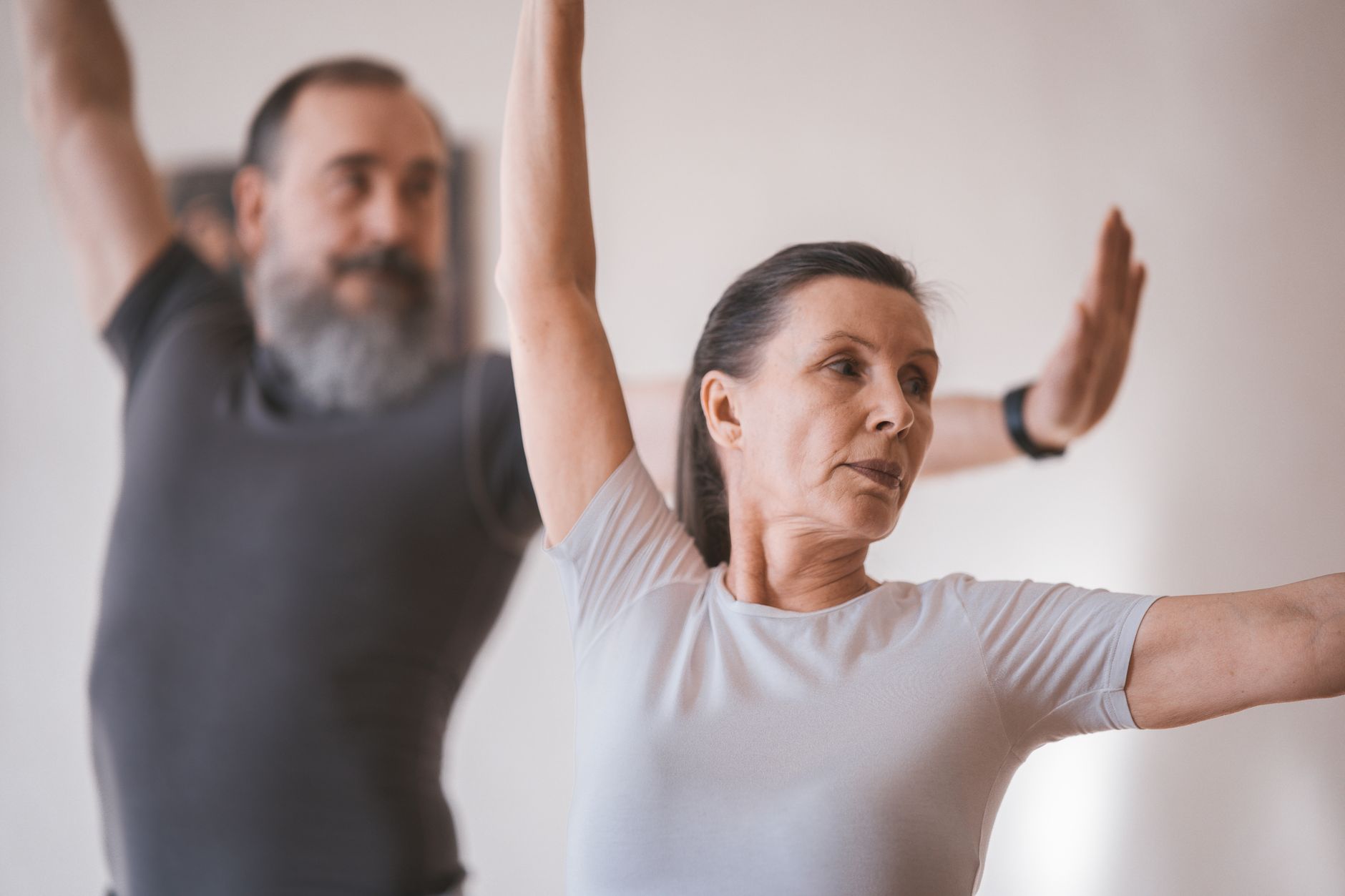
Introduction to Balance and Play
I still remember the day I realized that **balance isn't about standing still — it's about moving with confidence**. I was in my 60s, and a friend had invited me to try walking on a balance board. At first, I was hesitant, but as I started to move, I felt a sense of freedom and joy that I hadn't experienced in years. That's when it hit me: the key to maintaining balance and preventing falls isn't about static exercises, but about engaging in playful movement that challenges our bodies and brains. As someone who's been moving daily for over 50 years, I've seen firsthand the impact that balance training can have on our overall health and well-being. And I'm excited to share with you 10 simple balance exercises that you can do at home to improve your balance and reduce your risk of falls.
Stephen's two video programs — $12.99 for both
Active Play + 5-in-1 Training, one-time price, 30-day money-back guarantee.
Get the Complete Bundle →My Personal Journey with Balance
As a former professor at the University of Central Florida, I've always been interested in the science of movement and balance. But it wasn't until I started incorporating balance exercises into my daily routine that I truly understood the power of neuroplasticity. Our brains are capable of reorganizing and adapting throughout our lives, and balance training is a powerful way to tap into this potential. By challenging our balance, we're not only improving our physical stability, but also building cognitive reserve and reducing our risk of age-related diseases. I've been walking barefoot on balance boards and juggling while standing on one leg for years, and I can attest to the fact that **your body doesn't know the difference between exercise and play — but your brain does**. When we move with purpose and joy, we're more likely to stick with it, and that's when the real magic happens.
The Science of Balance
So, what exactly is balance, and how do we maintain it? Balance is the ability to control our center of gravity over our base of support, and it's essential for everyday activities like walking, standing, and even sitting. As we age, our balance can be affected by a range of factors, including declining vision, hearing, and proprioception (our sense of body position and movement). But the good news is that balance is a skill that can be improved and maintained through practice and training. By incorporating balance exercises into our daily routine, we can strengthen our ankles, hips, and core, improve our reaction time, and even enhance our cognitive function. And the best part? **The playground is the best gym you'll ever find**. You don't need any special equipment or training to get started – just a willingness to move and play.
10 Simple Balance Exercises to Try at Home
So, what are some simple balance exercises that you can try at home? Here are 10 of my favorites:
1. **Single-Leg Standing**: Stand on one leg, with the other foot lifted off the ground. Hold for 10-30 seconds, then switch legs.
2. **Heel-To-Toe Walking**: Walk along a straight line, placing the heel of one foot directly in front of the toes of the other foot.
3. **Balance Boards**: Use a balance board or a BOSU ball to challenge your balance and stability.
4. **Tai Chi**: Practice tai chi or other slow, flowing movements to improve your balance and coordination.
5. **Standing on Foam**: Stand on a foam pad or pillow to challenge your balance and stability.
6. **Eyes-Closed Standing**: Stand with your eyes closed, focusing on your breath and your body position.
7. **Single-Leg Squats**: Stand on one leg and perform a squat, keeping your back straight and your core engaged.
8. **Balance Beams**: Use a balance beam or a line on the floor to practice walking and balancing.
9. **Juggling**: Try juggling while standing on one leg or on a balance board.
10. **Dancing**: Put on some music and dance, incorporating balance challenges like single-leg standing and heel-to-toe walking.
Putting it All Together
The key to improving your balance is to make it a part of your daily routine. Start with small, manageable exercises and gradually increase the challenge as you become more confident. Remember, **if it's not fun, you won't do it. And if you don't do it, nothing changes**. So, find ways to make balance training enjoyable and engaging, whether that's by working with a partner, listening to music, or incorporating games and challenges. And don't be afraid to try new things and take risks – that's where the real growth happens. As someone who's worked with people in their 70s and 80s, I've seen firsthand that **I've watched people in their 70s and 80s transform in weeks**. With consistent practice and a willingness to learn, you can improve your balance and reduce your risk of falls. For more inspiration and guidance, be sure to check out my video programs on balance and movement – and remember, **balance isn't about standing still — it's about moving with confidence**.
Watch Stephen in Action
Start Your Balance Journey with Stephen
Stephen Jepson's complete training programs — playful exercises that improve balance, prevent falls, and keep the brain sharp at any age.
Photo by Mikhail Nilov • Published May 16, 2026